Marine Biodiversity and Ecosystem Functioning
EU Network of Excellence

 
Main Menu

· Home
· Contacts
· Data Systems
· Documents
· FAQ
· Links
· MarBEF Open Archive
· Network Description
· Outreach
· Photo Gallery
· Quality Assurance
· Register of Resources
· Research Projects
· Rules and Guidelines
· Training
· Wiki
· Worldconference


Register of Resources (RoR)

 People  |  Datasets  |  Literature  |  Institutes  |  Projects 

[ report an error in this record ]basket (0): add | show Print this page

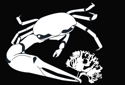
When a repellent becomes an attractant: harmful saponins are kairomones attracting the symbiotic Harlequin crab
Caulier, G.; Flammang, P.; Gerbaux, P.; Eeckhaut, I. (2013). When a repellent becomes an attractant: harmful saponins are kairomones attracting the symbiotic Harlequin crab. NPG Scientific Reports 3. https://dx.doi.org/10.1038/srep02639
In: Scientific Reports (Nature Publishing Group). Nature Publishing Group: London. ISSN 2045-2322; e-ISSN 2045-2322
Peer reviewed article  

Available in  Authors 

Keywords
    Lissocarcinus orbicularis Dana, 1852 [WoRMS]
    Marine/Coastal

Authors  Top 
  • Caulier, G.
  • Flammang, P.
  • Gerbaux, P.
  • Eeckhaut, I.

Abstract
    Marine organisms have developed a high diversity of chemical defences in order to avoid predators and parasites. In sea cucumbers, saponins function as repellents and many species produce these cytotoxic secondary metabolites. Nonetheless, they are colonized by numerous symbiotic organisms amongst which the Harlequin crab, Lissocarcinus orbicularis, is one of the most familiar in the Indo-Pacific Ocean. We here identify for the first time the nature of the molecules secreted by sea cucumbers and attracting the symbionts: saponins are the kairomones recognized by the crabs and insuring the symbiosis. The success of this symbiosis would be due to the ability that crabs showed during evolution to bypass the sea cucumber chemical defences, their repellents becoming powerful attractants. This study therefore highlights the complexity of chemical communication in the marine environment.

All data in the Integrated Marine Information System (IMIS) is subject to the VLIZ privacy policy Top | Authors 


If any information here appears to be incorrect, please contact us
Back to Register of Resources
 
Quick links

MarBEF WIKI

Erasmus Mundus Master of Science in Marine Biodiversity and Conservation (EMBC)
Outreach

Science
Responsive Mode Programme (RMP) - Marie Nordstrom, copyright Aspden Rebecca

WoRMS
part of WoRMS logo

ERMS 2.0
Epinephelus marginatus Picture: JG Harmelin

EurOBIS

Geographic System

Datasets


Web site hosted and maintained by Flanders Marine Institute (VLIZ) - Contact data-at-marbef.org